
The next bottleneck is not remembering more
Multiplayer AI is moving from individual copilots to teams of agents and humans working across research, analysis, decisions, and execution. As these systems enter the enterprise, the obvious infrastructure question is memory:
How can every participant retain context and build on prior work?
Memory matters. But memory alone does not make agent-produced knowledge safe to reuse.
A system can remember a claim and still not know:
- where it came from,
- what evidence supports it,
- which assumptions limit it,
- who approved it,
- whether it is still current,
- what later finding superseded it,
- or whether another agent should act on it.
That is the difference between remembering an output and trusting it as enterprise intelligence.
Shared memory can amplify shared mistakes
In a single-agent workflow, a weak output may create one bad answer. In a multiplayer workflow, that output can become an input to many downstream agents.
One agent summarizes a customer interview. Another extracts product requirements. A third creates a roadmap. A fourth produces an executive memo. If the original interpretation was unsupported, stale, or scoped incorrectly, memory helps the error travel faster.
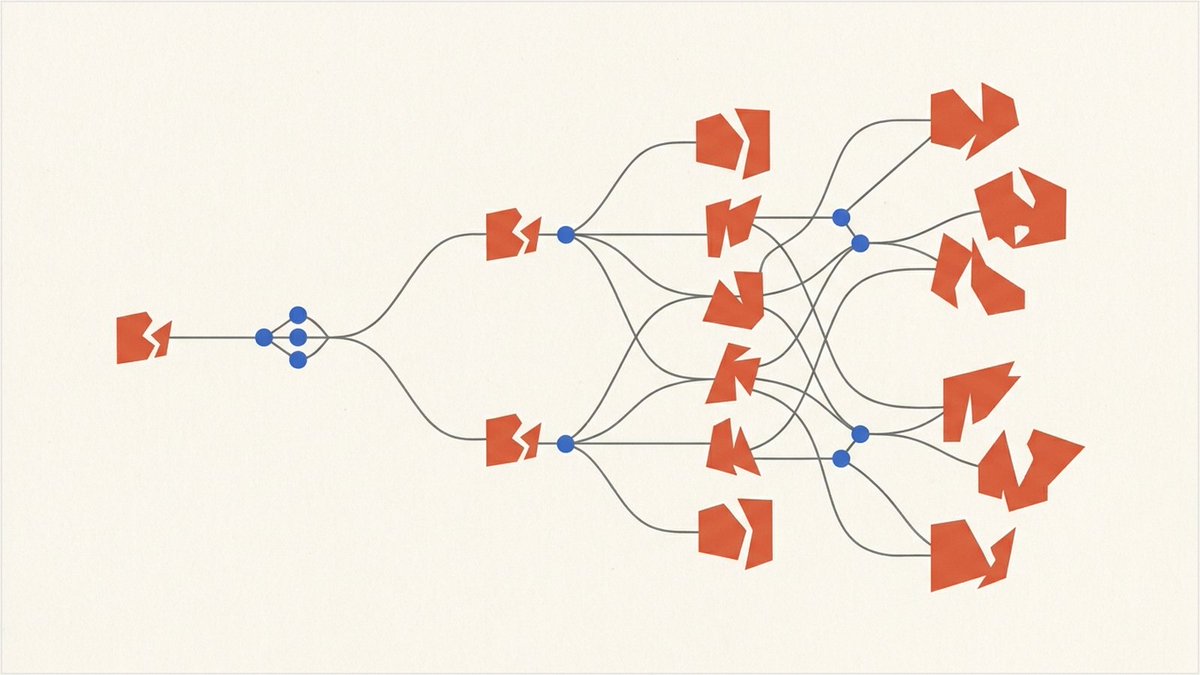
The more connected the system becomes, the more important the admission question becomes:
What is allowed to enter shared memory—and under what conditions may humans and agents reuse it?
Without an answer, shared memory is not institutional intelligence. It is a highly efficient accumulation layer for both insight and uncertainty.
Retrieval is not verification
Most AI memory systems optimize for storage, retrieval, and relevance. They help an agent find something that was said or produced before.
But relevance does not establish reliability.
Finding a prior claim does not tell an agent whether the claim was reviewed. A citation does not automatically show whether the evidence supports the exact conclusion. A recent document may still rely on expired assumptions. A confident answer may conflict with a decision already made elsewhere.
Enterprise reuse requires more than, “Can the system retrieve it?” It requires:
- Provenance: What produced this claim, and from which sources?
- Evidence: What supports it—and what contradicts it?
- Scope: Where, when, and for whom is it valid?
- Authority: Who or what is permitted to approve it?
- Lifecycle: Is it proposed, admitted, disputed, expired, or superseded?
- Outcome: What happened when the organization acted on it?
These are not memory features. They are the foundation of a trust and verification layer.
The missing object is the governed claim
Documents are useful containers, but multiplayer AI needs a smaller unit of coordination: the claim.
A claim can be inspected, challenged, approved, reused, and superseded. It can carry evidence and scope. It can show which human or agent admitted it and what happened downstream.
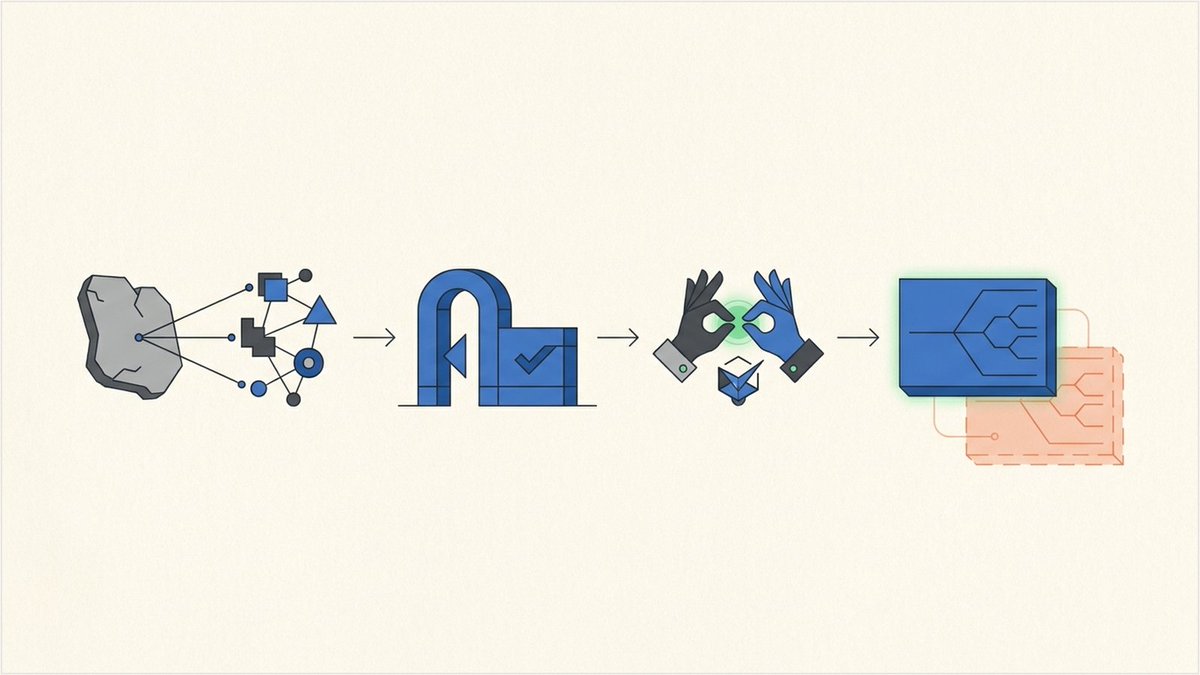
Instead of asking every agent to reread an entire history and independently decide what to trust, the system can expose a governed state:
- Proposed: generated but not yet safe to reuse
- Verified: checked against required evidence or policy
- Admitted: approved for a defined workflow and audience
- Disputed: challenged and awaiting resolution
- Superseded: replaced by a newer claim while preserving history
- Expired: no longer valid without renewed review
This turns memory from a passive archive into an operational intelligence layer.
Trust must be multiplayer, too
Verification cannot mean adding a single human approval button to every workflow. That would recreate the bottleneck AI was supposed to remove.
The trust layer has to coordinate different forms of authority:
- agents can run evidence and consistency checks,
- domain experts can approve claims within their scope,
- policies can define which claims require escalation,
- systems can block expired or disputed knowledge from downstream use,
- and every participant can see why a claim is reusable.
The goal is not to eliminate uncertainty. It is to make uncertainty explicit and govern how it propagates.
That is what allows multiplayer AI to scale without forcing every new participant to start from zero blindly trust everything already in memory.
From impressive output to reusable intelligence
Enterprise buyers are rarely blocked because an AI system cannot produce enough content. They are blocked at the moment of commitment:
- Can this analysis enter the knowledge base?
- Can another team rely on it?
- Can the next agent use it without rereading every source?
- Can we explain the decision later?
- Can we correct the record without losing history?
Memory helps agents continue a conversation. A trust and verification layer helps an enterprise continue operating on what those agents produce.
That distinction will shape the next generation of multiplayer AI infrastructure.
Memory answers: What happened before?
Trust and verification answer: What are we willing to carry forward?
The winning multiplayer AI systems will need both.